











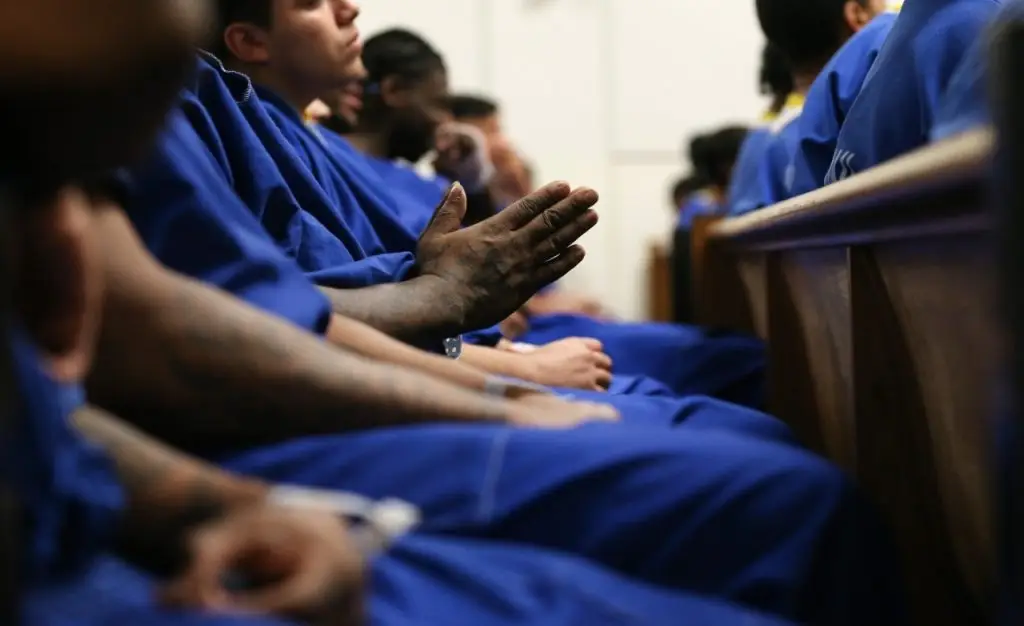
We can’t improve minority health without addressing incarceration

[ad_1]

Throughout National Minority Health Month this April one of the most significant drivers of poor health among Black and Brown people in America has gone ignored: incarceration. 

Millions of people are under correctional supervision, and nearly one-in-two Americans have experienced the incarceration of a close relative, making incarceration and its consequences a common experience in America today. 

Incarceration is a social condition that does enormous damage to the health of millions. One 2015 study found that each year of imprisonment corresponds to a two-year life expectancy reduction. The effects of sentencing linger and devastate, whether currently incarcerated or newly released. Studies show that previously incarcerated individuals have higher mortality rates than other citizens and have increased rates of drug abuse, suicidal ideation and HIV prevalence.

Incarceration disproportionately affects people of color, driving a wedge in health disparities by race. Black and Latino people are respectively five and 1.3 times more likely to be in prison than white people. Life expectancy is more than four years lower than the national average in majority-Black neighborhoods.

Incarceration doesn’t just leave lasting damage to incarcerated individuals but affects entire families and communities. For example, having a parent imprisoned is linked to many children’s health and behavioral problems that can persist through adulthood. Having a parent or sibling incarcerated is associated with worsened mental health.

Congress must show more leadership. In a small but meaningful step around public health, the House created Social Determinants of Health (SDOH) Caucus in 2021, which is designed to crowdsource ways in which Congress and the federal government can help facilitate social determinant interventions, a worthy and important cause. But, sadly, its charter doesn’t even include incarceration as a social determinant of health. 

This oversight is emblematic of a larger problem. Using a public relations media search tool, there were no mentions of incarceration in connection with National Minority Health Month. Lawmakers and the media must begin to recognize and address the link between mass incarceration, racial justice and health inequities. But unfortunately, for far too long, the harms of mass incarceration and its collateral consequences have been an afterthought.

One way forward is greater collaboration between health care systems and our nation’s 3,000 plus jails and prisons. Currently, there is almost no collaboration — they operate entirely within their own silos. Forming partnerships between civilian and carceral health systems will give incarcerated populations and their loved ones the visibility within our health systems that they deserve and improve continuity of care. 

Additionally, incarceration must be framed as a public health issue. As demonstrated by the rapid spread of the COVID-19 pandemic in jails and prison and, subsequently, to the larger public, mass incarceration creates fodder for dangerous disease. Public awareness that incarceration poses a health risk for those both within systems and out would disrupt the conceptualization of incarceration as a “black box.” Hopefully, such awareness would mobilize decarceration efforts and resources to prevent worsened health caused by incarceration.

Given the evidence, incarceration endangers people not just in the immediate, but also long term, plaguing systems-impacted people, along with their families, and the broader community. If we are to truly honor the charge of National Minority Health Awareness Month, to “highlight the important role individuals and organizations can play in helping reduce health disparities,” then it’s time incarceration’s health-harming consequences are brought into the debate.

Evie Lopoo is project manager of research and writing at Columbia University Justice Lab’s Square One Project, cultivating new thinking on responses to crime in America and promote more effective strategies.

[ad_2]

Source link

Trending Topics

Features

Download and distribute powerful vaccination QI resources for your community.

Sign up now to support health equity and sustainable health outcomes in your community.

MCED tests use a simple blood draw to screen for many kinds of cancer at once.

FYHN is a bridge connecting health information providers to BIPOC communities in a trusted environment.

Discover an honest look at our Medicare system.

ARC was launched to create a network of community clinicians to diversify and bring clinical trials to communities of color and other communities that have been underrepresented.

The single most important purpose of our healthcare system is to reduce patient risk for an acute event.

Related Posts
The Communities Most Burdened by Disease Should Be the First to Benefit from Artificial Intelligence
Black and Asian Cancer Patients Wait Longer for Pain Relief in New Study
What Is Cyclosporiasis? The Foodborne Illness Showing Up in the News
Scroll to Top
Featured Articles
The Communities Most Burdened by Disease Should Be the First to Benefit from Artificial Intelligence
The Communities Most Burdened by Disease Should Be the First to Benefit from ...
Cancer Pain Care Access Gap Hits Black, Asian Patients
Black and Asian Cancer Patients Wait Longer for Pain Relief in New Study
What Is Cyclosporiasis Symptoms, Food Safety, and Reasons
What Is Cyclosporiasis? The Foodborne Illness Showing Up in the News
Why Minority Mental Health Awareness Month Matters More Than Ever
From Childhood Cancer to Alzheimer’s and ALS Celebrity Health Stories Spark National Conversation on Disease, Caregiving, and Equity
From Childhood Cancer to Alzheimer’s and ALS Celebrity Health Stories Spark N...
Learn How NMQF Is Transforming Early Disease Detection in Flint
Categories
AI
ATTR-CM
BIPOC News
Cancer
Clinical Trials
Covid19
Diseases of the Body
Environment
Health Data
Health Equity Events
Health Policy
Health Tips
Subscribe to our newsletter to receive our latest news​
All Stories
The Communities Most Burdened by Disease Should Be the First to Benefit from Artificial Intelligence
The Communities Most Burdened by Disease Should Be the First to Benefit from ...
Cancer Pain Care Access Gap Hits Black, Asian Patients
Black and Asian Cancer Patients Wait Longer for Pain Relief in New Study
What Is Cyclosporiasis Symptoms, Food Safety, and Reasons
What Is Cyclosporiasis? The Foodborne Illness Showing Up in the News
BIPOC News
The Communities Most Burdened by Disease Should Be the First to Benefit from Artificial Intelligence
The Communities Most Burdened by Disease Should Be the First to Benefit from ...
Why Minority Mental Health Awareness Month Matters More Than Ever
From Childhood Cancer to Alzheimer’s and ALS Celebrity Health Stories Spark National Conversation on Disease, Caregiving, and Equity
From Childhood Cancer to Alzheimer’s and ALS Celebrity Health Stories Spark N...
Environment
UV Safety Awareness Month Raises Urgency on Skin Cancer Prevention and Sun Protection Equity
UV Safety Awareness Month Raises Urgency on Skin Cancer Prevention and Sun Pr...
Extreme Heat Safety Tips 5 Ways to Protect Your Health This Summer fyh.news
5 Heat Safety Tips That Could Protect Your Health This Summer
Lupus Awareness Event in Baltimore Aims to Support Research and Shine a Light on Health Disparities
Lupus Awareness Event in Baltimore Aims to Support Research and Shine a Light...
Work Force
A multigenerational Black and Hispanic family sitting together in a park, showing how Social Security helps support older adults, people with disabilities, and families across generations.
Millions of Older Americans Could Face Smaller Social Security Checks by 2032...
dreamstime_s_243253251
The Caregiver Journey: The Hidden Backbone of American Healthcare
Families gather at a Bronx community festival with live music, kids’ activities, and health booths sharing SOMOS social care resources and free screenings.
Celebrating Hispanic heritage while learning about health care

[xyz-ips snippet=”Output-Source-Name”]

Clinical Trials
Clinical Trial Diversity Remains a Critical Challenge in Alzheimer’s Research
Healthcare professional collecting a blood sample from a diverse patient as part of multicancer early detection screening.
Bridging the Gap: How Multicancer Early Detection Can Advance Health Equity i...
dreamstime_s_174488289
PCOS to PMOS: Why the 2026 Name Change Matters for Women’s Health

[xyz-ips snippet=”Output-Source-Name”]

Vaccines and Outbreaks
A parent checking a child's temperature during summer, illustrating the changing RSV patterns and year-round respiratory virus risks.
Can You Get RSV During the Summer?
Michelle Lam, MBA, of NYC Health + Hospitals/Elmhurst & Amy Harris of NYC Health + Hospitals/Elmhurst
Healthcare Leaders Spotlight Vaccine Equity and Adult Immunization Strategies...
Measles Outbreaks Surge: Essential Facts and Prevention Strategies
Other Categories
AI
Read the latest AI News stories trending around the world
ATTR-CM
Cancer
Read the latest Cancer stories trending around the world
Covid19
Diseases of the Body
Read about the latest Diseases of the Body trending around the world
Friday Webinars
Every Friday, we bring you insightful webinars covering critical topics in healthcare, data equity, and policy reform.
Health Data
Read the latest Health Data stories trending around the world
Health Equity Events
Read the best Health Equity Events around the country.
Health Policy
Read the latest Health Policy stories trending around the world
Health Tips
Heart Health
Read the latest on Heart Health News, Stories and Tips.
kidney Health
Read more trending News about Kidney Health, Stories and Tips.